
citiesabc
Enter Pro: How AI Democratises Entrepreneurship For SMEs?
10 Jun 2026

Small and medium-sized enterprises (SMEs) account for more than 90% of businesses worldwide and contribute significantly to employment, innovation, and local economic development. Yet despite their importance, SMEs have historically faced a common challenge: limited access to the resources required to compete with larger organisations.
Building digital products, implementing automation systems, creating customer engagement platforms, and developing internal business tools often require significant investments in technology, talent, and infrastructure. For many smaller businesses, these barriers have slowed innovation and limited growth opportunities.
Today, artificial intelligence is beginning to change that equation.
A new generation of AI-powered development platforms is reducing the cost and complexity of creating digital products and operational systems, making entrepreneurship and innovation more accessible to businesses of all sizes.
The question is no longer whether AI will transform business. The more important question is whether AI can democratise entrepreneurship itself.
The Traditional Innovation Gap
For decades, entrepreneurship has been influenced by a resource gap.
Large organisations have enjoyed access to:
- Dedicated software development teams
- Product managers
- Marketing departments
- Data analysts
- Customer service operations
- Technology infrastructure
Meanwhile, many SMEs have relied on limited budgets, small teams, and off-the-shelf software solutions.
Even when business owners identified opportunities for innovation, implementation often remained out of reach.
Launching a custom customer portal, building an internal dashboard, creating an automated support system, or developing a digital service frequently required external consultants, software agencies, or technical co-founders.
As a result, many promising ideas never progressed beyond the planning stage.
AI Is Lowering The Cost Of Experimentation
One of the most significant impacts of AI may be its ability to reduce experimentation costs.
Historically, testing a new business concept required substantial upfront investment. Entrepreneurs needed to build products before understanding whether customers actually wanted them.
Today, AI-powered platforms enable founders to move from idea to prototype in a fraction of the time and cost previously required.
Using natural language prompts, users can increasingly generate:
- Business applications
- Customer support systems
- Booking platforms
- Internal dashboards
- Workflow automations
- AI-powered assistants
- Analytics interfaces
The result is not simply faster development.
It is a fundamental reduction in the barriers to experimentation.
When experimentation becomes cheaper, innovation becomes more accessible.
A Practical SME Scenario
Consider a small consulting firm seeking to modernize its operations.
Traditionally, creating a digital business platform might involve:
- Hiring developers
- Building a customer management system
- Integrating booking functionality
- Implementing analytics
- Developing customer support workflows
- Managing cloud infrastructure
The process could take months and require significant investment.
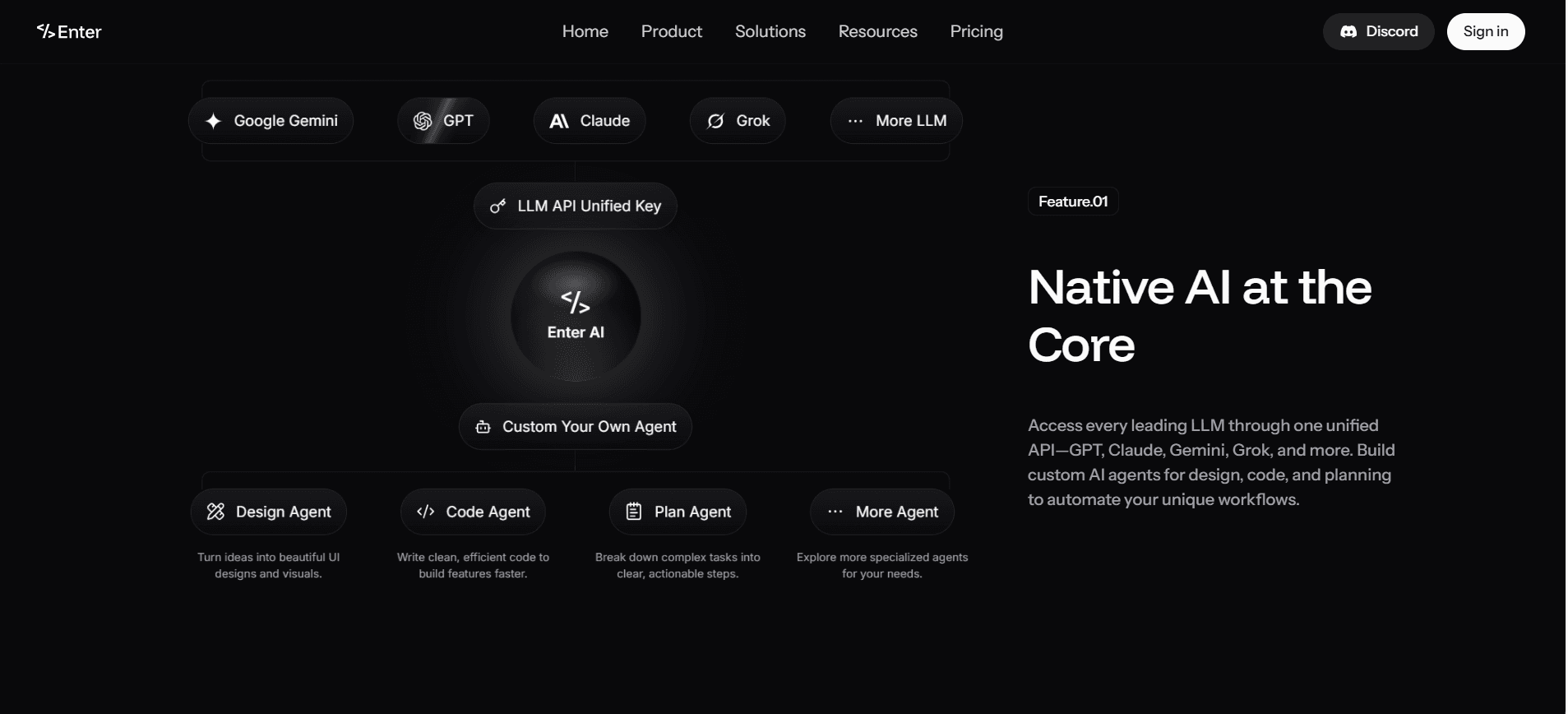
Today, AI-native development platforms such as Enter Pro are attempting to simplify that process.
A business owner can describe requirements in natural language and generate a platform that includes:
- AI-powered customer support
- Lead management workflows
- Booking and contact forms
- FAQ automation
- AI-generated customer responses
- Business analytics dashboards
Rather than assembling multiple software solutions and technical services, users can create integrated operational systems from a single environment.
While these platforms do not eliminate the need for business strategy or customer understanding, they can significantly reduce technical complexity.
For SMEs, that reduction matters.
Why Does This Matter?
The implications extend beyond individual businesses.
Cities around the world are investing heavily in innovation ecosystems, startup communities, digital transformation strategies, and economic resilience initiatives.
Traditionally, entrepreneurship support focused on:
- Access to capital
- Incubators and accelerators
- Talent development
- Physical infrastructure
While these remain essential, AI introduces a new dimension.
If entrepreneurs can launch products faster and at lower cost, cities may witness:
- Increased startup creation
- More digital-first SMEs
- Higher rates of innovation
- Greater participation from underrepresented groups
- Stronger local entrepreneurial ecosystems
In many ways, AI may function as economic infrastructure rather than simply a productivity tool.
The cities that understand this shift early may gain significant competitive advantages.
Empowering The Next Generation Of Entrepreneurs
The impact may be particularly significant for students, young entrepreneurs, and first-time founders.
Historically, launching a technology-enabled business often required:
- Technical expertise
- Access to funding
- Extensive development resources
Today, AI is beginning to reduce these requirements.
Students can build prototypes.
Creators can test digital products.
Consultants can develop client solutions.
Small business owners can automate operations.
The distance between idea and execution is shrinking.
This does not guarantee success.
However, it expands access to opportunity.
And that distinction is important.
Human Creativity Remains The Competitive Advantage
Despite rapid advances in AI, successful entrepreneurship still depends on uniquely human capabilities.
Technology can accelerate execution.
It cannot replace:
- Vision
- Leadership
- Creativity
- Customer empathy
- Strategic thinking
- Community building
AI may help entrepreneurs build faster.
But entrepreneurs must still identify meaningful problems worth solving.
The future is unlikely to be defined by AI replacing business owners.
It is more likely to be defined by AI increasing the leverage of individuals and small organisations.
Towards A More Inclusive Innovation Economy
Perhaps the most significant promise of AI is not automation itself.
It is accessibility.
When the tools required to build businesses become easier to use, more affordable, and more widely available, innovation is no longer concentrated exclusively within large corporations or well-funded startups.
Instead, it becomes available to local businesses, students, creators, consultants, educators, and emerging entrepreneurs.
The democratisation of entrepreneurship is not simply a technology story.
It is an economic development story.
And as AI-powered platforms continue to evolve, they may help create a future where the ability to innovate depends less on resources and more on ideas.
For cities seeking to foster resilient, inclusive, and innovation-driven economies, that may be one of the most important developments of the coming decade.


